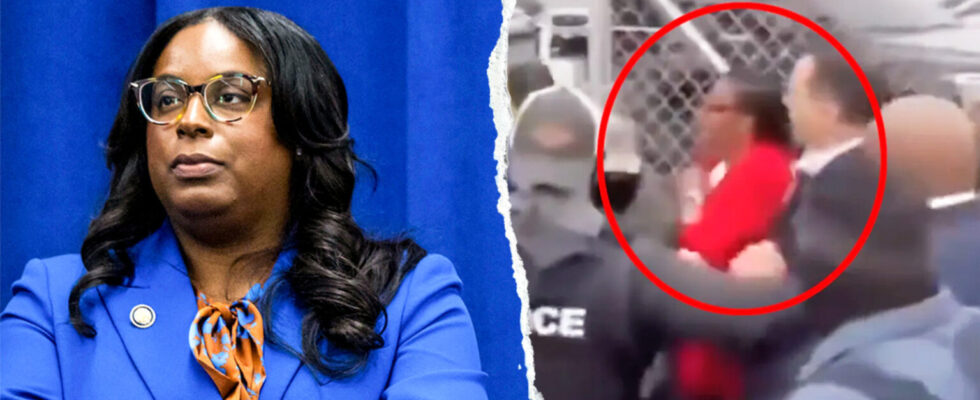
The U.S. Department of Justice has been allowed to move forward with its prosecution of Democratic Representative LaMonica McIver of New Jersey, following a ruling by U.S. District Judge Jamel Semper. McIver faces detention and assault-related charges stemming from an incident at the Delaney Hall immigrant detention center in Newark, where she is accused of forcibly impeding and interfering with federal immigration officers. Earlier this year, McIver sought to have the case dismissed, arguing that her actions were protected under the Constitution because they occurred while she was performing official congressional oversight duties. Judge Semper ruled that legislative immunity does not apply to all of her actions, although he determined that one specific charge is covered by Congress’s Speech or Debate Clause. He also rejected McIver’s claim that the prosecution, initiated under President Donald Trump’s administration, was vindictive.
McIver has pleaded not guilty and could face up to 17 years in prison if convicted. She maintains that the charges are politically motivated and violate constitutional protections, despite video footage showing her physically pushing and striking a federal ICE agent during the May visit. Following the incident, the Department of Homeland Security issued multiple statements and social media posts criticizing McIver and other Democratic lawmakers who were present at the facility. In response, McIver’s legal team filed a motion to limit what they described as prejudicial “extrajudicial statements” by government officials that could influence the legal proceedings.
As part of the court’s response, Judge Semper ordered the government to remove several DHS posts from X that referenced the incident. According to a filing by Deputy Attorney General Todd Blanche dated October 30, most of the posts cited by the defense were removed, though one remained because it was controlled by a private journalist. McIver’s attorney later complained that DHS failed to fully comply with the court’s directive and continued issuing public statements. He warned that without stronger court intervention, McIver would be forced to repeatedly challenge statements that he argued had no relevance to the indictment and unfairly prejudiced her case.