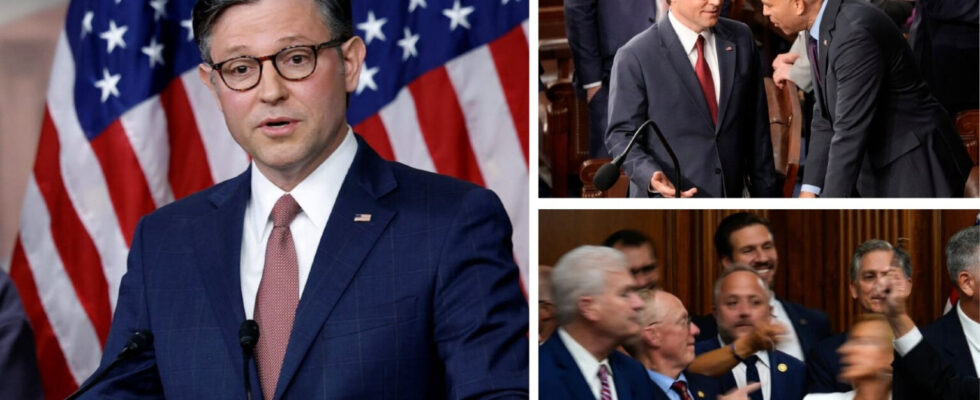
The House passed the National Defense Authorization Act on Wednesday, advancing the annual Pentagon funding bill to the Senate after a 312–112 vote. The legislation authorizes $901 billion in War Department spending, with 18 Republicans and 94 Democrats voting against final passage. An earlier procedural vote narrowly succeeded 215–211 after four Republicans—Reps. Anna Paulina Luna, Marjorie Taylor Greene, Tim Burchett, and Lauren Boebert—switched their votes from no to yes at the last moment. All Democrats voted against the procedural rule. House and Senate leaders had already reconciled their versions of the bill, making Senate passage and delivery to President Donald Trump likely.
Opposition from hardline conservatives focused on provisions including $400 million per year in Ukraine funding for two years and the absence of language banning a Federal Reserve central bank digital currency. Supporters of the CBDC prohibition framed it as a privacy and civil liberties safeguard. Other contested sections restrict Trump’s authority to reduce troop levels in Europe and South Korea or to pause weapons shipments to Ukraine. The bill also withholds one quarter of War Secretary Pete Hegseth’s travel budget until the Pentagon releases raw footage of strikes on alleged narco-trafficking boats near Venezuela.
Speaker Mike Johnson emphasized provisions that raise enlisted pay by 4 percent, eliminate diversity, equity, and inclusion policies, combat antisemitism, cut $20 billion in outdated programs and bureaucracy, and strengthen measures targeting China. The NDAA includes a privacy-related requirement for FBI disclosure when investigating federal candidates, but excludes IVF coverage for military families and AI preemption of state laws. It establishes outbound investment screening for high-risk technologies tied to China, bans certain Chinese biotech and components from Pentagon contracts, expands China-focused diplomatic monitoring, and repeals inactive Iraq war authorizations while retaining the 2001 AUMF.