The U.S. Supreme Court has unanimously ruled in favor of a delivery driver seeking to broaden the category of workers exempt from mandatory arbitration under federal law, extending beyond those employed strictly by transportation companies. In a 9–0 decision, the Court overturned a lower court ruling that had dismissed a proposed class action lawsuit brought by Neal Bissonette, a delivery driver for LePage Bakeries, a subsidiary of Flowers Foods, the maker of Wonder Bread. Bissonette argues that Flowers Foods improperly classifies its drivers as independent contractors rather than employees, allowing the company to avoid paying minimum wage, overtime, and other legally required benefits. The case centers on the interpretation of the Federal Arbitration Act of 1925, which generally enforces arbitration agreements but exempts certain workers engaged in interstate commerce, including seamen, railroad employees, and other similar classes of workers.
For years, many companies have relied on mandatory arbitration agreements, asserting that arbitration is faster and more efficient than court litigation. Critics counter that such agreements limit workers’ rights and reduce corporate accountability by preventing collective legal action. In 2001, the Supreme Court ruled that the FAA exemption applied only to transportation workers, but it did not clearly define whether this included all workers who transport goods or only those employed by transportation service companies. That ambiguity led to conflicting rulings in lower courts. In 2022, the Second Circuit Court of Appeals held that Bissonette was not exempt because his employer sold bread rather than transportation services. The Supreme Court’s decision now revives his lawsuit and clarifies that the exemption may apply more broadly.
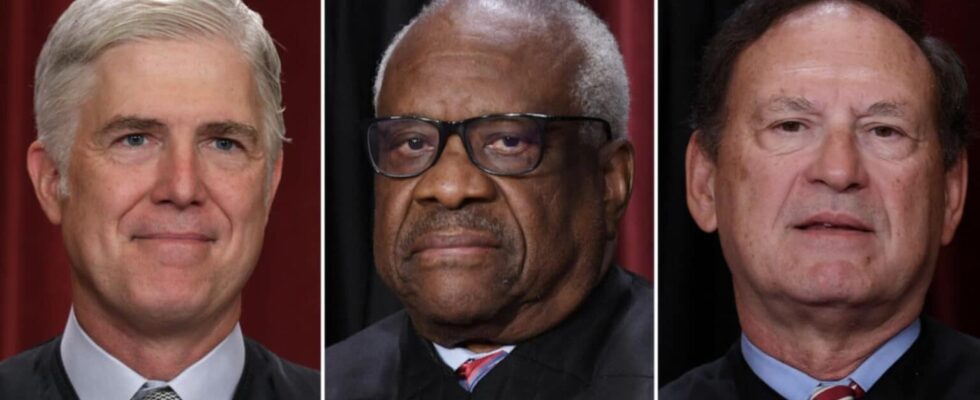
Separately, the Supreme Court recently dismissed a petition involving President Donald Trump and Vice President JD Vance, with Justice Samuel Alito taking no part in the decision. The case, filed by frequent litigant DMT MacTruong, accused Trump and Vance of serious constitutional violations and sought their removal from office. The Court provided no explanation for Alito’s non-participation, which comes amid ongoing scrutiny over his involvement in Trump-related cases. Alito has faced criticism following reports that political flags were flown outside his home after the January 6 Capitol riot, though he has denied personal involvement and rejected calls for recusal under the Court’s ethics standards.