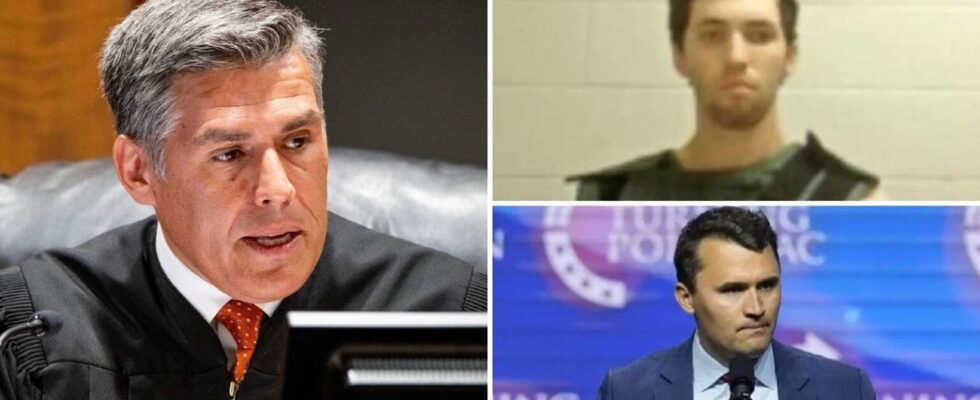
The man accused of killing Charlie Kirk, founder of Turning Point USA, will appear in person in court for the first time on Thursday, nearly three months after his arrest. The hearing is considered the most significant step in the case so far, unfolding amid growing concerns from Kirk’s widow and the media over increasingly secretive proceedings. Tyler Robinson, charged with aggravated murder and multiple related felonies tied to Kirk’s September 10 shooting at a Utah Valley University event, has previously appeared only via video or audio from jail. Since then, much of the case has been handled behind closed doors, prompting several media organizations, including Fox News, to demand greater transparency.
The coalition of media outlets has formally requested that prosecutors and defense attorneys provide advance notice before sealing filings or restricting public access, arguing that the public should have the opportunity to challenge such decisions. Legal analyst Roger Bonakdar said the abrupt shift toward secrecy has been noticeable. He noted that authorities initially shared extensive details, including alleged audio recordings, a purported confession, and surveillance footage, but have since shut down the flow of information.
The judge has ordered Thursday’s hearing to be held in person and as open as possible, though information from an Oct. 24 closed hearing remains sealed. Strict rules have also been set on how Robinson may be shown in court, prohibiting images of him in shackles or photographs of his family, and requiring reporters to follow specific conduct guidelines. These restrictions follow earlier disputes over whether Robinson could appear in jail clothing.
Security concerns are believed to be the reason behind Robinson’s limited public exposure, with officials citing potential risks. Bonakdar said Thursday’s hearing will focus heavily on the order to seal records, as the media challenges what they argue is a violation of First Amendment rights. The hearing may either clarify the case’s direction or introduce new limits, but the trial itself is still likely a year or more away.