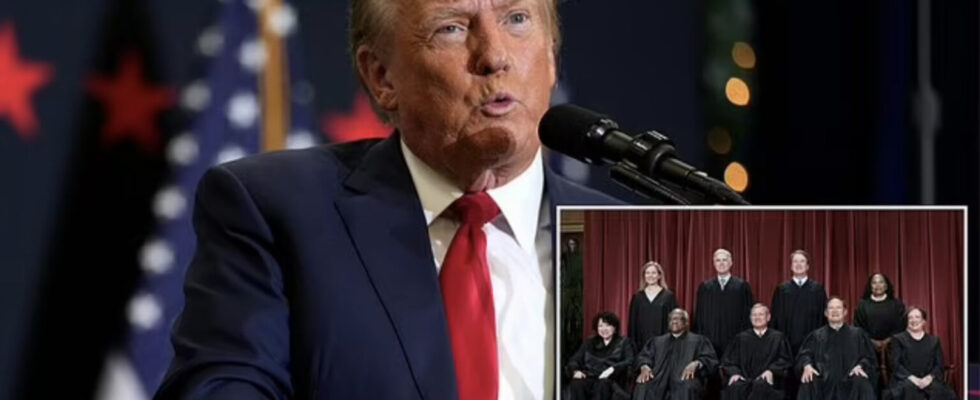
The Supreme Court signaled this week that it may be ready to dismantle a foundational pillar of the modern administrative state, suggesting it could overturn Humphrey’s Executor v. United States, the 1935 decision that created independent federal agencies and limited presidential authority to remove their leaders. During oral arguments in Trump v. Slaughter, several justices questioned the constitutionality of insulating officials at entities like the Federal Trade Commission and Securities and Exchange Commission from direct presidential control. The case stems from President Donald Trump’s decision to remove an FTC commissioner without cause, and a ruling in his favor could effectively eliminate what conservatives have long called a “fourth branch of government.”
Justice Neil Gorsuch pressed whether Humphrey’s Executor ever fit within the Constitution’s design, and Senator Eric Schmitt, in an amicus brief, argued that the precedent erodes democratic accountability by placing executive power in the hands of unelected regulators. Legal scholars note that the decision allowed Congress to construct agencies that blend legislative, judicial, and executive functions, but critics say the old “quasi-legislative” and “quasi-judicial” labels no longer reflect how these entities operate. Even cautious conservatives on the Court appeared unconvinced that a 1930s framework can still justify the independence of agency heads who wield significant executive authority today.
Some of the Court’s liberal members warned that overturning the precedent could open the door to partisan pressure or abuse, but the conservative majority seemed doubtful that the administrative state can remain insulated from presidential oversight. A ruling for Trump would reassert sweeping executive removal power, restructure the balance between Congress and the presidency, and bring the New Deal-era model of bureaucratic autonomy to a historic end when the decision arrives later this term.