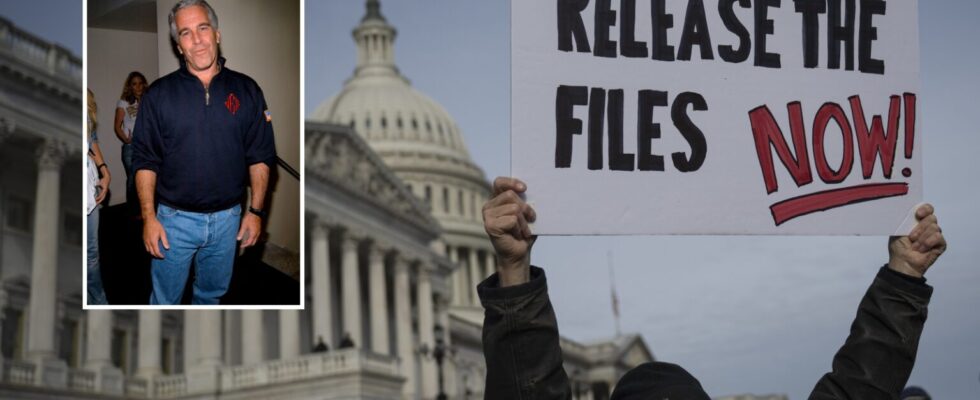
A federal judge has ruled that the Justice Department may unseal transcripts from the original criminal investigation into Jeffrey Epstein, citing the newly enacted Epstein Files Transparency Act. The Florida grand jury inquiry, conducted nearly two decades ago, had resulted in Epstein receiving a controversial plea deal, allowing him to avoid federal prosecution and serve a one-year work-release sentence for soliciting underage girls. U.S. District Judge Rodney Smith noted that the new law overrides traditional grand jury secrecy rules, requiring disclosure of unclassified records related to Epstein and Ghislaine Maxwell, while still protecting personal privacy and barring the release of materials involving sexual or physical abuse.
The Justice Department is also seeking to release grand jury materials from Epstein’s 2019 federal prosecution in New York, a case that ended with Epstein’s suicide but later led to Ghislaine Maxwell’s conviction. Victims’ responses to potential disclosure have been mixed. Some, like Annie Farmer, support releasing transcripts, while others worry it could compromise their privacy. Attorneys representing witnesses have argued that the law should not apply to grand jury materials, emphasizing the risk to innocent third parties mentioned in the records.
Meanwhile, the House Oversight Committee recently released previously unseen photos and documents from Epstein’s private island under the new law. The images reveal disturbing details about the environment in which Epstein allegedly trafficked and abused underage girls, including a private dental suite within the estate, highlighting the scale and secrecy of his operations.