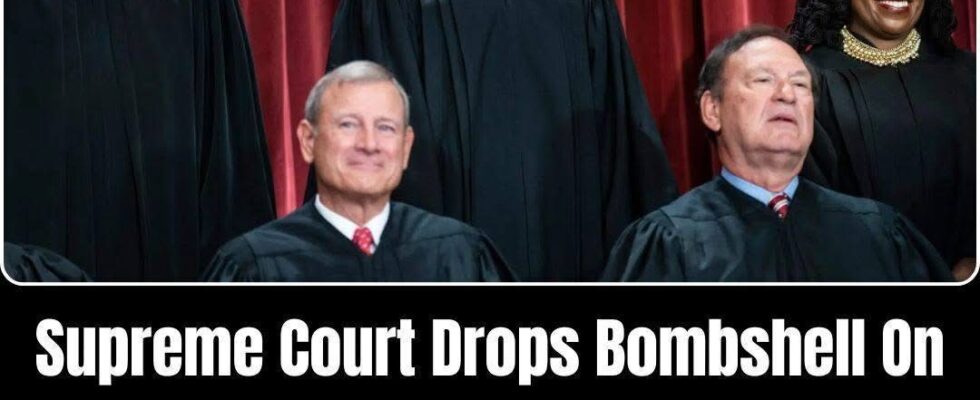
Texas has ignited a major new voting-rights battle at the Supreme Court with an emergency request asking the justices to allow the state to use its new Republican-leaning congressional map for the 2026 elections. Attorney General Ken Paxton argued that, although the map was designed to strengthen the GOP politically, it was not the racial gerrymander a lower court claimed it to be. A three-judge panel ruled 2–1 that Texas acted with racial motives by dismantling several majority-minority districts and replacing them with GOP-leaning seats, ordering the state to revert to its older map. Circuit Judge Jerry Smith issued a blistering dissent, calling the ruling the most obvious case of judicial activism he had ever seen. Justice Samuel Alito quickly put the lower court decision on hold, temporarily restoring Texas’ new map.
Paxton urged the Supreme Court to keep the map in place, citing the Purcell Principle, which discourages courts from altering election rules close to voting. He repeatedly referenced Judge Smith’s dissent as the proper way for the Court to interpret the case. Texas undertook this rare mid-decade redistricting after Donald Trump encouraged GOP-led states to strengthen the party’s narrow House majority. Meanwhile, the Justice Department suggested that several minority-heavy districts in the current map might not survive constitutional review, and Gov. Greg Abbott insisted the changes were politically motivated rather than discriminatory.
The dispute triggered swift reactions nationwide. Democrats in California approved a map that could eliminate five GOP seats, while Missouri and North Carolina enacted maps more favorable to Republicans, and Virginia is moving toward a Democrat-leaning map. If the Supreme Court ultimately blocks Texas’ new map, Democrats could gain the upper hand in the national redistricting landscape. The case also raises major questions about the Voting Rights Act and its tension with the Constitution’s Equal Protection Clause, offering an early signal of how the Court may rule on these issues in the future.