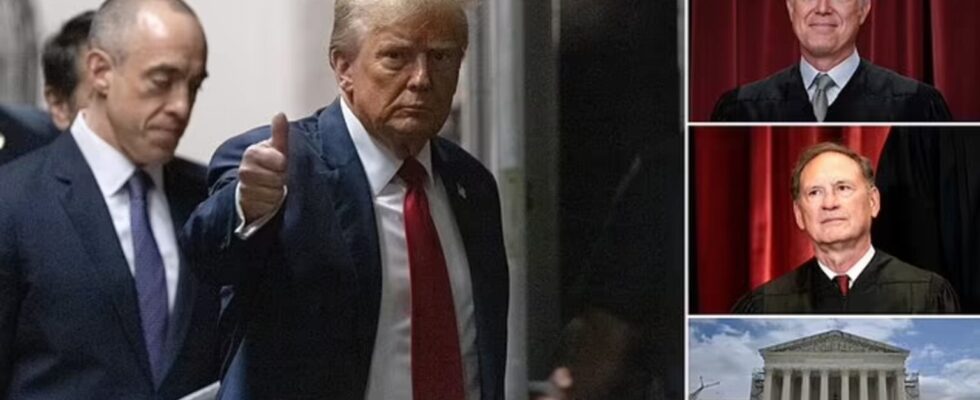
The Supreme Court has allowed the Trump administration to move forward with sending eight immigrants held at a U.S. military base in Djibouti to South Sudan. In a brief unsigned order, the justices clarified that their earlier decision — which stayed a ruling by a federal judge in Massachusetts restricting “third country” removals — applies fully to the men now detained overseas. The original ruling by Judge Brian Murphy had blocked the government from deporting immigrants to countries not listed in their removal orders unless it confirmed they would not face torture. Murphy later said the administration violated his order by attempting to deport the men to South Sudan, a country the U.S. warns against traveling to due to armed conflict, crime, and kidnapping.
The Trump administration argued that Murphy’s safeguards were obstructing foreign policy and national-security operations. Solicitor General D. John Sauer urged the justices to intervene quickly, accusing the district judge of “unprecedented defiance.” Attorneys for the immigrants countered that Murphy’s decision simply required the government to follow existing law. After initial confusion over whether Murphy’s order still held force, the administration returned to the Supreme Court seeking a clearer directive, which the justices issued by stating the prior stay applied “in full.”
Justices Sonia Sotomayor and Ketanji Brown Jackson dissented, warning that the government intended to send the immigrants — from Cuba, Vietnam, and Laos — into danger without proper safeguards. Sotomayor argued that the Supreme Court should not have considered the government’s request before the lower courts had fully addressed it. Justice Elena Kagan, despite disagreeing with the original stay, sided with the majority this time, stating that a district court cannot enforce an order the Supreme Court has already paused.